
m-lathe integrates seamlessly with over 10,000 qualified manufacturing partners, including US-based ITAR-qualified and AS9100D-registered CNC milling facilities. That massive network means that whatever your part, we have a shop and machine to make it. We support 3-axis, 4-axis, 5-axis, and right-angle milling capabilities to help you rapidly create designs from simple straight lines to complex geometric shapes.
M-lathe offers instant pricing, on-demand lead times, and design-for-manufacturability feedback on materials and manufacturing processes for your custom CNC-milled parts, regardless of industry. Get your instant quote today.
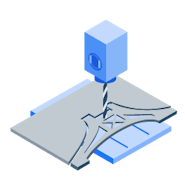
Because CNC can be applied to virtually any material, it is perfect for rapid tooling, i.e., creating fixtures or molds.
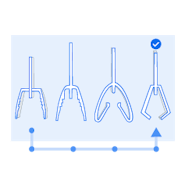
The range of materials available, low CNC machining costs per unit, and speed of production makes CNC a great option for prototyping.
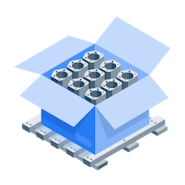
High-quality finish, vast material options and precise tolerances have made CNC a favorable technology for end-use parts.
Milled parts up to 80” x 48” x 24” (2,032 x 1,219 x 610 mm).
For features of size (Length, width, height, diameter) and location (position, concentricity, symmetry) +/- 0.005”.
0-12" +/- 0.005", Angularity 1/2 degree. For 24" and beyond please consult Manufacturing Standards.
M-lahte can manufacture and inspect to tight tolerances, including sub +/- 0.001" tolerances, per your drawing specifications and GD&T callouts.
0.020” (0.50 mm). This may vary depending on part geometry and chosen material.
M-lathe can accommodate any standard thread size. We can also machine custom threads; these will require a manual quote review.
The standard finish is as-machined: 125 Ra or better. Additional finishing options can be specified when getting a quote.
Sharp edges will be broken and deburred by default. Critical edges that must be left sharp should be noted and specified on a print.
The Basics Of CNC Mills
CNC mills are automated cutting machines using a rotating spindle-head to cut away unwanted material. CNC milling machines come in a variety of sizes and different axis configurations. This manufacturing process is mainly utilized to cut harder metals but can work with workpiece materials ranging from plastic and aluminum to stainless steel and titanium.
How CNC Milling Works
CNC mills excel at profile cutting harder materials. Like all CNC machines, a CNC mill is controlled with G-Code created through CAM software. The Gg-Code instructs the machine where to move the tool head, how fast to spin the tool, how deep to cut, how to move the workpiece, and other factors relating to speed, feed rate, and coordination. The G-Code complexity depends on how many axes the milling machine has.
Mills can still be used for profile cutting of softer materials, but are not as cost-effective for that use as CNC routers. The main difference between these machines is that with a CNC router the workpiece remains stationary while the router cutting head is directed around the piece, while a CNC mill may move both tool head and workpiece. CNC mills are mainly used in industrial manufacturing, while CNC routing is more common for lower output manufacturing like woodworking.